3 Things You Need to Know About Women Veterans Today
March 8, 2022
By: Kelly E. Dyer, Director of Programs
When the former Oregon Women Veterans Coordinator, Elizabeth Estabrooks, MSW, presented a training on “Identifying Women Veterans: What’s in it for Everyone?” I knew it was something I couldn’t miss.
Even though I’m from a military family, there’s a lot of important information about women veterans that we all need to know.
Recognizing Women as Veterans
When you see a woman walking down the road carrying her baby and groceries, would you think she’s a veteran? What if you saw a Texas beauty queen, or a woman alongside a man at the Veterans Affairs (VA) medical center? Is she a veteran?
Too often, the image that comes to mind when we think of a “veteran” is an older, white man who is proudly wearing an Army hat and has seen serious combat abroad. This depiction has become so normalized in our culture (such as in movies, video games, the news, commercials, etc.) that it might be hard for you to believe the military is actually one of the most diverse organizations in the world! People from all races, genders, sexualities, abilities, and backgrounds are represented in the veterans population, even though we don’t necessarily see this reflected in our media or everyday life.
Stereotyping Puts Limits on Women Veterans
Our culture still limits what we view as “women’s roles” to include mostly activities that involve sensitivity and caring for others, such as mothers, nurses, teachers, or assistants. It’s a challenge for many people to believe that a woman can play Legos with her kids one day and the next be deployed to Afghanistan to drive tankers through bomb-laden roads!
Even at VA clinics and hospitals, women report they are often assumed to be the spouses or caregivers of men veterans rather than be seen as veterans themselves.1 While these stereotypes are slowly being debunked, it’s still easier to believe that almost all veterans are older, white men and almost all women aren’t suited for the physical and emotional challenges of military life.
One woman veteran even told me that someone asked her why she was “playing dress up in her father’s military uniform,” and he didn’t believe her when she said they were her own fatigues.
When 74% of women veterans surveyed said the general public did not recognize their service, it’s a wakeup call that we must do better to support our women veterans!1
Who identifies as a “Veteran?”
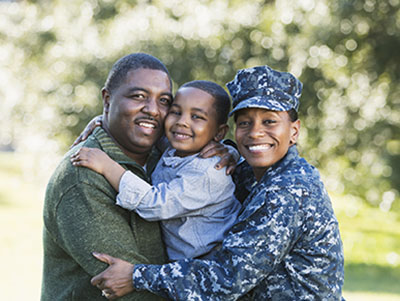
Women are less likely than men to identify as a veteran when you ask, “Are you a veteran?” But, if you ask the same women “Did you serve in the military?” you’ll probably hear a “yes.” On the surface, these two questions seemed the same to me, but I quickly found out why reframing it is so important.
Just like civilians are bombarded with media images of what a veteran “is and looks like,” so, too, are women veterans! When women veterans internalize these cultural messages, they begin to feel as if their service wasn’t as valuable or as “difficult” as men’s (particularly if a woman was in non-combat roles). Women veterans then start feeling uncomfortable claiming their rightful title of veteran.
Ask women “Did you serve in the military?” Doing so opens up a space for women to tell you about their military service, what their military experiences meant to them, and lets them know you see them as a veteran.
Ke(ll)y Takeaway – Ask women “Did you serve in the military?” instead of “Are you a veteran?”
Women in the Military – A Growing and Diverse Population
Did you know there are over 28,000 women veterans in Oregon? You also might not know women veterans/service members are:
- The fastest growing sub-group among veterans.
- 20% of all new military recruits.
- 12% of Operation Enduring Freedom/Operation Iraqi Freedom veterans.
- 9% of the total U.S. veteran population.
- A more racially and ethnically diverse population than that of men veterans.1
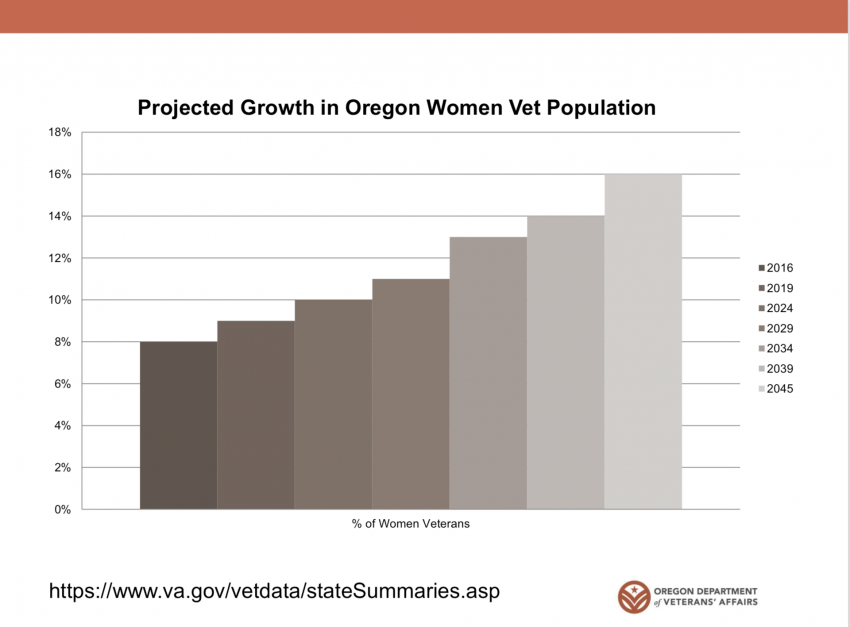
Ke(ll)y Takeaway – The number of women veterans is on the rise and increasingly becoming more diverse.
Service Women Are Often Impacted by Traumas
Women can experience a variety of military traumas. I knew PTSD was a common service-related health issue for veterans, but I found out that military sexual trauma (MST), hypertension, major depressive disorder, migraines, and lower back pain are common as well for women veterans. Then, I learned one of the most upsetting statistics - suicide among women veterans has increased by 85% since 2001, and young women in the military are at a twelve times higher risk of suicide than their non-veteran peers.1
Military Sexual Trauma
I was horrified to learn just how many people experience military sexual trauma (MST) — one in three women, and one in eight men, experience some form of military sexual assault while on active-duty. Data specifically on MST and it’s impact on trans and non-binary veterans is still in the early stages after the repeal of “Don’t Ask, Don’t Tell” in 2010. The VA states that MST is the “experiences of repeated, threatening sexual harassment or sexual assault that occurred while the veteran was in the military.”
The impact of military sexual trauma on women is significant:
- Women who experienced military sexual trauma are nine times more likely to have PTSD than those who have not experienced MST.
- 40% of women veterans who are homeless reported experiencing MST while serving our country.1

When I heard from Elizabeth that MST often goes unreported, I wanted to know why. I learned that fear of retaliation, stigma, and military procedures for reporting are creating barriers for all genders to disclose this trauma. For instance, the perpetrator could be the commanding officer who, to protect their own military career, may obstruct the reporting process. Then there’s also the real risk that MST survivors could receive a less than honorable discharge from the military, lose a promotion, be forced to transfer to a new station or role, or even have an unwanted medical discharge after reporting MST. Could you imagine that happening in your workplace?
Traumas Are Going Untreated
For such significant health care issues (often as a direct result of serving our country), we want to believe the VA is taking care of all our veterans. Yet, women are less likely to use VA services, receive disability benefits, or have a substance use diagnosis and treatment plan.1
This is largely related to those same stereotypes I mentioned before, and that’s in addition to other issues women experience when using VA services - an unwelcoming (and sometimes hostile) environment, long wait times, lack of childcare services, and gaps in available services at many VA clinics.
Ke(ll)y Takeaway – Women veterans often need critical, gender-specific medical care, but aspects of military culture and health care organizations create barriers for accessing these services.
Show Your Support to Women Veterans
As you can see, I learned a lot about the challenges that women are facing in the military and veterans community, and I hope you did, too. All of this new information inspired me to find out more about these amazing women service members and veterans who are resilient, smart, and brave! Below is a short list of what I found. I challenge you to pick two things to do this week to become more informed about women veterans’ issues - invite a friend, family member, or colleague to join you!
- Start asking the question “Did you serve in the military?”
- Read 5 Things Women Veterans Want You to Know
- View the I Am Not Invisible Campaign
- Follow @OregonWomenVeterans and @minorityvets (Minority Veterans of America) on Facebook
- Host a watch party for The Invisible War or Lioness (documentaries)
- Skim the report on Oregon Women Veterans Health Care
- Challenge yourself to re-think what a “veteran” is and looks like (Hint: It can be anyone!)
- Browse the VA’s webpage – Center for Women’s Veterans
- Donate to the Returning Veterans Project to support free, confidential care for all genders.
Want more? Read Women Veterans Face Additional Obstacles After Service.
Do you have additional, credible sources for and about women veterans? Feel free to send them my way at .(JavaScript must be enabled to view this email address)!
1Estabrooks, Elizabeth (2019, February 12). Identifying Women Veterans: What’s in it for Everyone [webinar].

Are you equipped to provide veteran ready healthcare?
Download your FREE guide today! How to Effectively Support Military Veteran Clients: What Healthcare Providers Need to Know will give you the foundation you need to deliver more effective support to military veterans!
Share this online:


